August 12th 2026

The Nationwide Eclipse Ballooning Project (NEBP), led by PI Dr. Angela Des Jardins at Montana State University, sent five teams to Iceland and Spain for the August 12, 2026 total solar eclipse (TSE). The five teams included highly motivated students and seasoned faculty with strong backgrounds in atmospheric science, varied engineering disciplines, and data analysis to ensure high-quality data collection and interpretation. In addition to their solid experience with high-altitude balloon launches and/or similar aerospace projects, all selected teams demonstrate technical competence and proven safety awareness.
Due to the terrain and anticipated weather, the two Atmospheric Science teams conducted their campaign in Iceland and the three Engineering teams went to Spain.
Atmospheric Science teams examined tropopause changes caused by the cold, dark shadow of the eclipse, especially the planetary boundary layer. The thickness and behavior of this layer are influenced by conditions such as surface temperature and moisture. During the day, solar heating causes turbulence and mixing in the atmosphere. When the surface cools, that mixing decreases and the boundary layer can become shallower. Understanding these changes helps us better understand the atmosphere in general. Data was collected by Graw radiosondes flown on 70 small balloons (35 per team). Flights will started 18 hours before and continued eight hours after the eclipse, with more frequent flights during sunrise, sunset, and the eclipse.
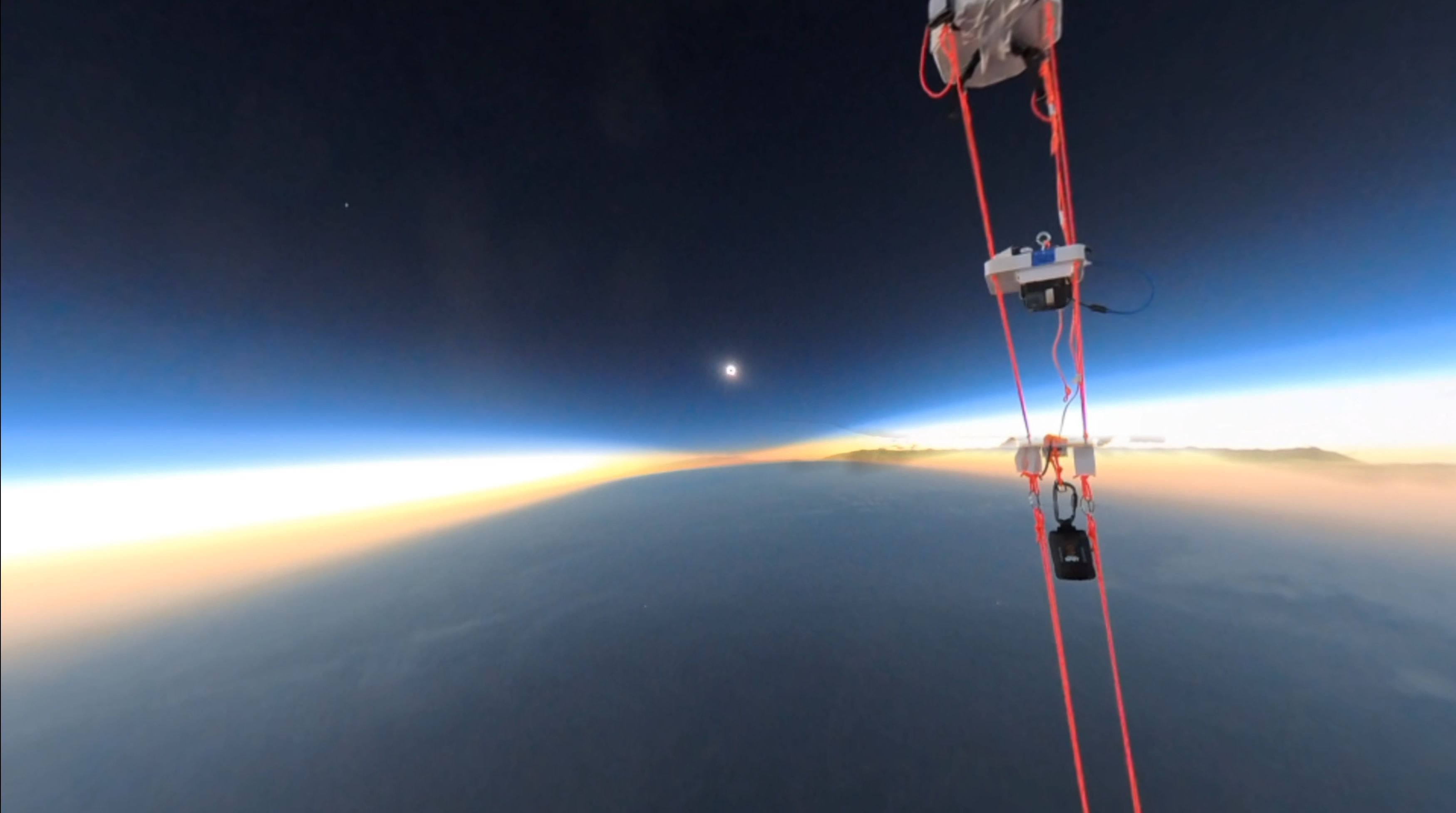
Engineering teams captured the eclipse shadow from a space-like perspective using 360-degree cameras and conducted other data-intensive observational experiments. These experiments were flown on seven latex balloons with the total payload weight limited to 4 kg per balloon. The payloads communicated with key ground station systems, including flight-tracking.
The Nationwide Eclipse Ballooning Project is supported by NASA's Science Mission Directorate Science Activation program and by NASA's Space Grant College and Fellowship program. (Award number 80NSSC26M0049)
 Special thanks to Zephalto for their assistance with flight liability insurance!
Total Solar Eclipse Campaign in Iceland and Spain
NASA Science Soars During August Total Solar Eclipse. Posted July 27, 2026
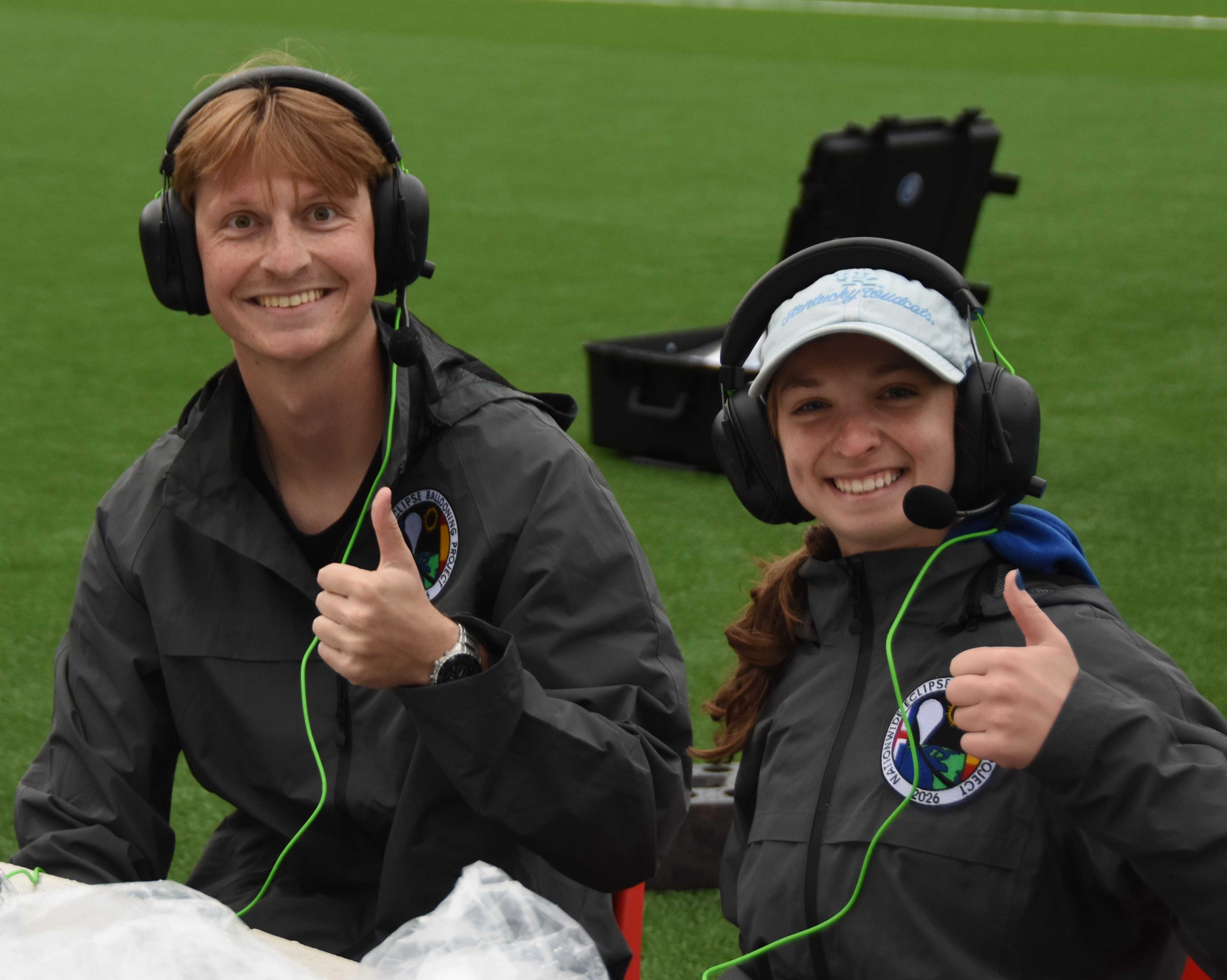 NASA Broadcast Recording, including highlights of the NEBP effort, especially at 39:45 - 46:00m.
Veritasium video: We sent a camera to space to film the solar eclipse
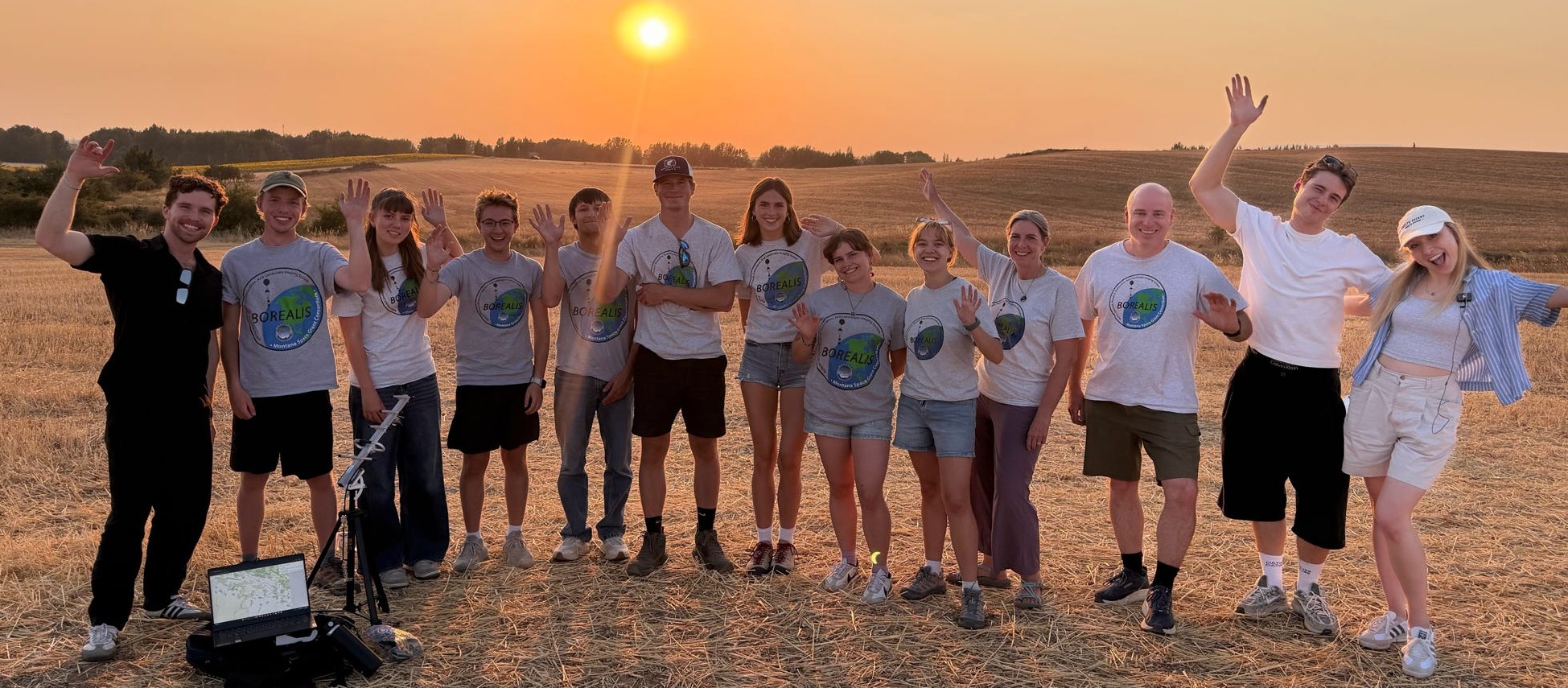
NASA Shares Views of August Solar Eclipse from Ground, Air, Space. Posted August 21, 2026
Participating teams
The five teams include the following. Each team brings partnerships with their local Space Grant Consortium and/or their institution for the support of 6-8 summer 2026 interns.
Engineering teams
- Montana State University (MSU), led by Dr. Mike Walach
- University of Bridgeport (UB) and University of Hartford (UH), led by Dr. Jani Macari Pallis and Dr. Nicholas Zoghb
- University of North Florida (UNF), led by Dr. Nirmalkumar Patel and Dr. Himani Kaushal
Atmospheric Science teams
- University of Idaho (UI), led by Dr. Matt Bernards
- University of Kentucky (UK), led by Dr. Sean Bailey
Engineering Flights
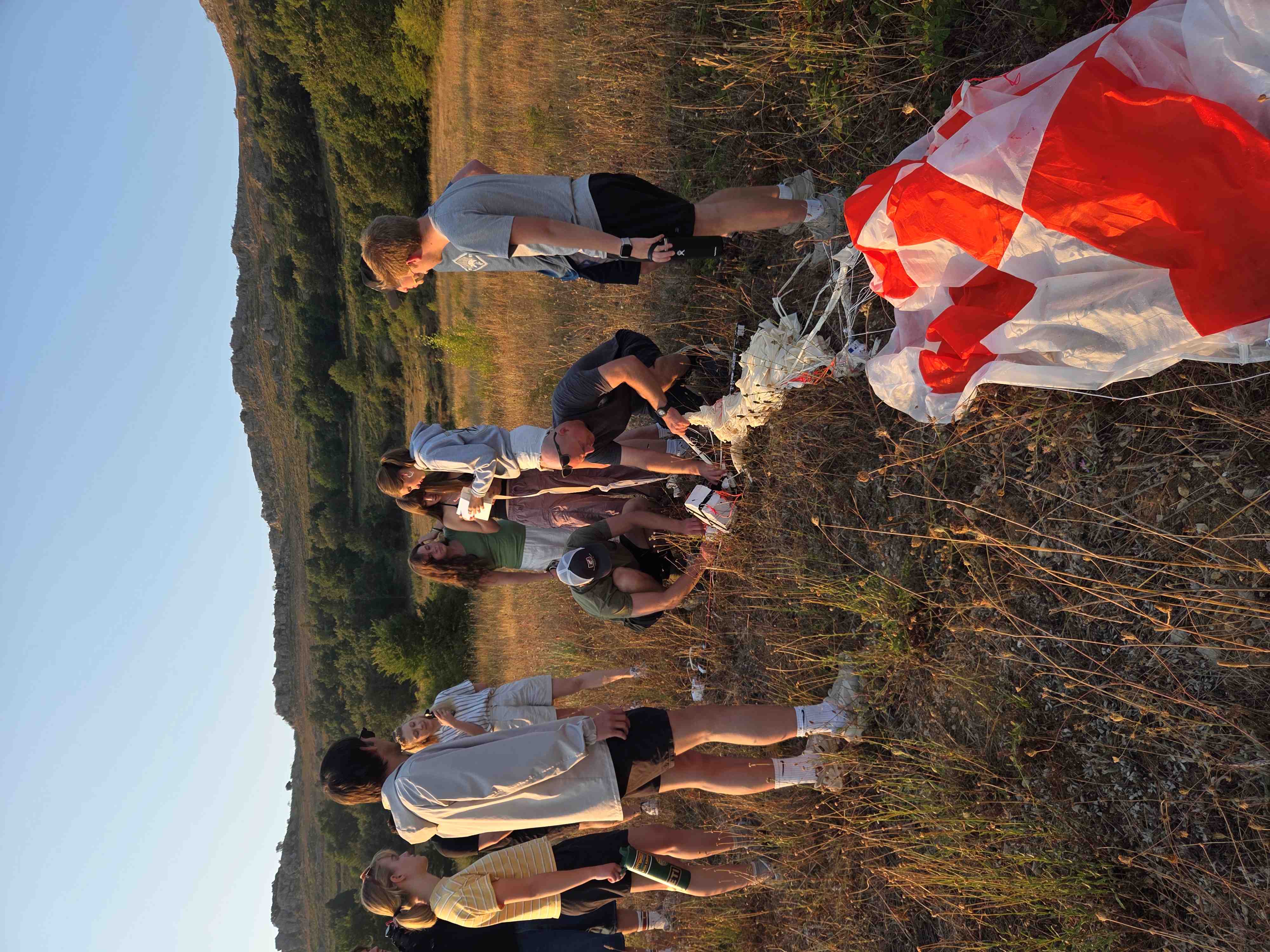
Each of the three Engineering teams flew 2-3 balloons carrying up to 4 kg. Desired flight altitudes were between 90,000 and 100,000 feet. Two teams flew from Villadiego and the third from Burgos, Spain. Due to the eclipse being at sunset, some payload recoveries took place on the 13th. Experiments included the following.
- Variation in ozone concentration during a TSE in Spain.
-
Effect of a TSE on radio communication using Long Range (LoRa) radio.
- Changes in the radiation profile with altitude and with respect to the eclipse.
-
Imagery of the Moon’s shadow on Earth from a near-space perspective with 360-degree and other cameras.
Atmospheric Science Campaign 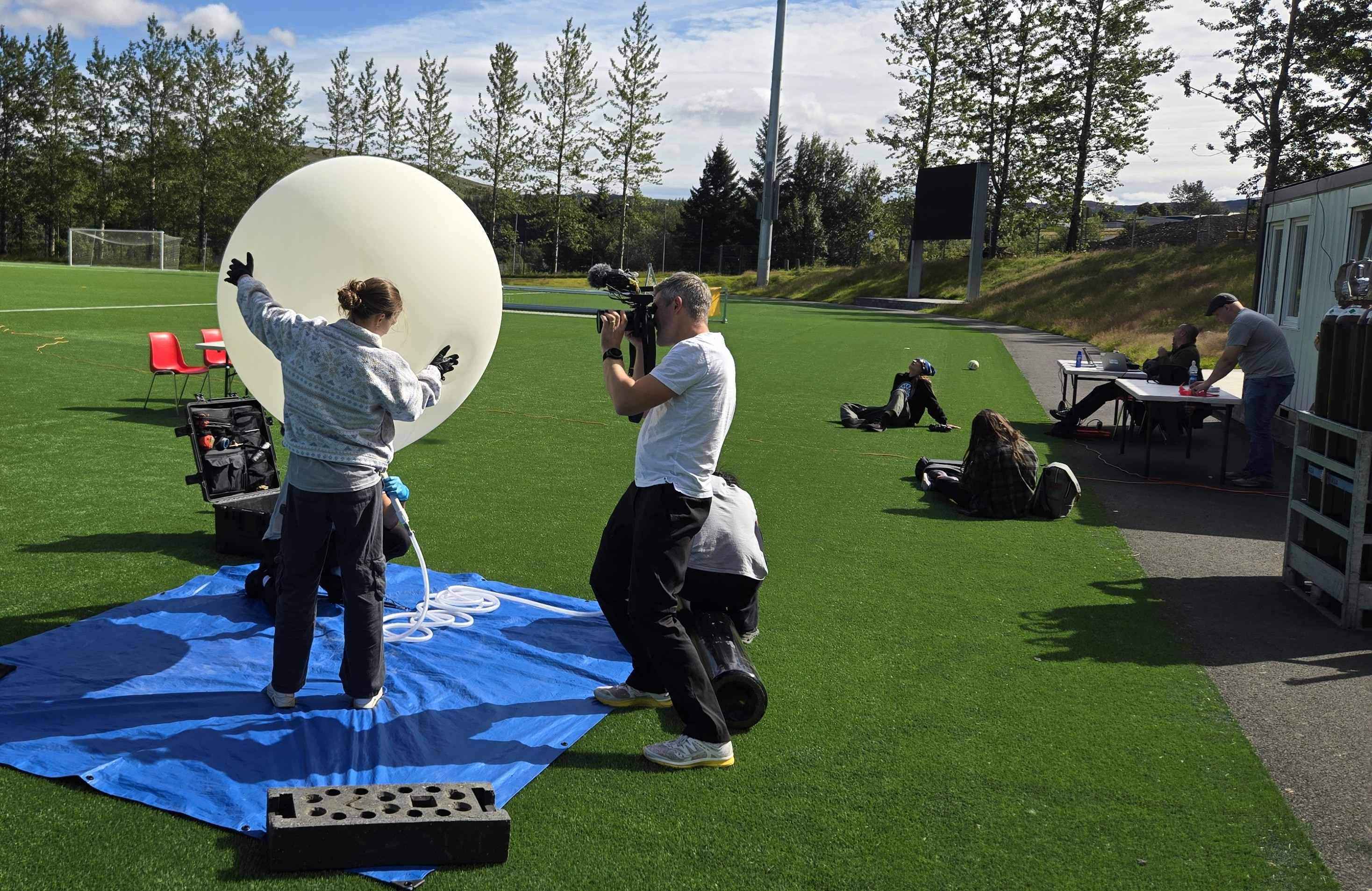
The two Science teams conducted the high-cadence radiosonde flight plan that has been demonstrated during past eclipses to be successful in delivering high-impact scientific measurements. Considering the rapid evolution of the Planetary Boundary Layer during sunset and the eclipse overpass, teams added several more flights during those two periods.
The campaign started at 00:00 UTC on the 12th and ended at 06:00 UTC on the 13th, covering the entire cycle of sunrise (05:00 UTC), TSE (16:40 – 18:50 UTC), and sunset (22:00 UTC) with added launches before and after to create the baseline for comparison. They also collected high-temporal ground meteorological measurements to better assess cloud impacts and the fast surface layer response.
- Task 1: Examining Planetary Boundary Layer (PBL) response to TSE and diurnal variation.
- Task 2: Examining tropopause response to TSE and diurnal variation.
Maps
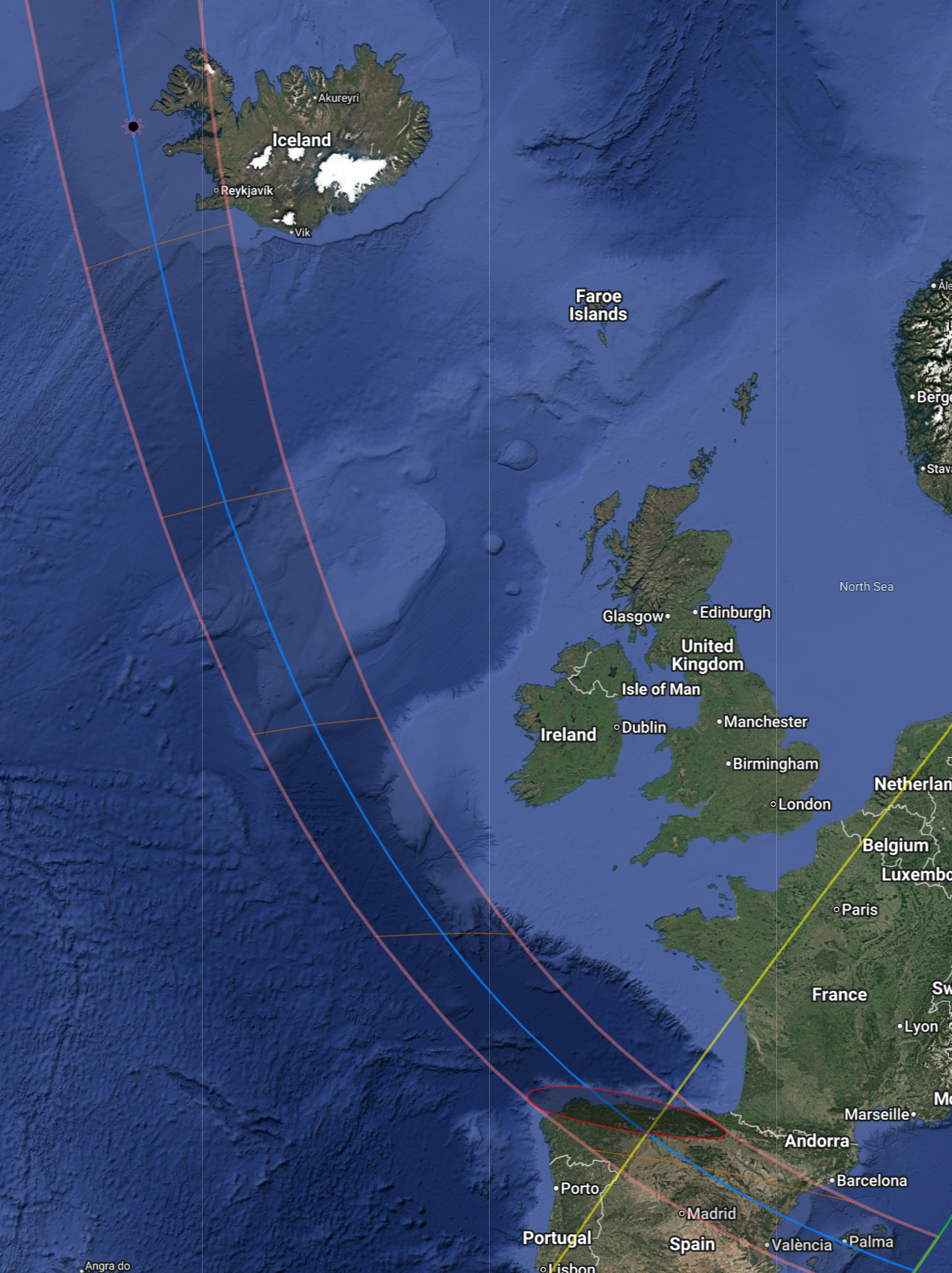
Check out this interactive map of the 2026 total eclipse path.